 Mobile Image
 Mobile Image
 Mobile Image

Original Image

Collectively the third-largest employer in the U.S., nonprofit organizations drive critical, life-changing outcomes for people, as well as protecting, strengthening, and advocating for our communities, lands and waterways, plants and animals, the planet, and more.
Their unique financial structures and myriad funding models mean nonprofit leaders need specific expertise to support their fiscal well-being and, in turn, their ability to achieve their missions. As a values-driven bank, Amalgamated Bank is proud to bank thousands of progressive and social justice nonprofits as they seek to bolster their financial positions and align their money with their missions.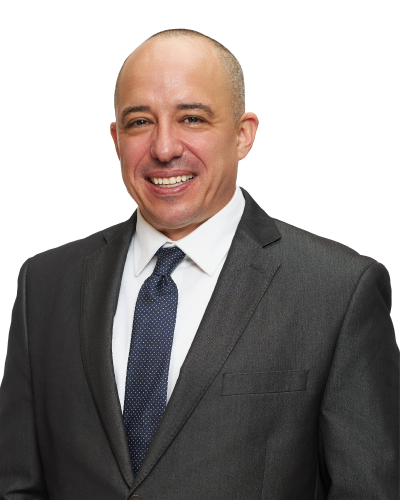
Our nonprofit banking team is uniquely knowledgeable about the needs and challenges of nonprofits because it is composed of people who have worked directly in the nonprofit industry. For example, Clovis Thorn is a Commercial Banker with Amalgamated Bank who specializes in nonprofits. Prior to this role, Clovis was the Managing Director of Development and Communications at Grand St. Settlement, where he led fundraising strategies and advocacy initiatives for an organization that serves more than 15,000 New Yorkers.
Hudson Guild is a nonprofit organization founded in 1895 in what was then the tough, working-class neighborhood of Chelsea, New York. Created to provide a platform for neighbors to organize and improve living conditions, today the nonprofit continues this work through programs focused on community building, youth development and education, mental health, and the arts.
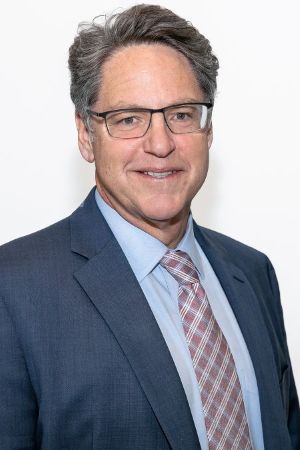 Hudson Guild Executive Director, Ken Jockers has led the organization since 2008. In 2013, amid a period of financial difficulties for the well-established organization, he initiated the organization’s relationship with Amalgamated Bank. Since then, Amalgamated has supported Hudson Guild as it developed its financial portfolio and enhanced its financial well-being, enabling the organization to do more of its critical work serving the Chelsea community.
In this Q&A, Clovis and Ken discuss the financial challenges and opportunities facing nonprofit organizations, and how a strong relationship between nonprofits and their banking partners can help more nonprofits achieve individual financial health and enhance the well-being of the entire nonprofit sector.
Clovis, to kick things off, can you describe the services and strategies Amalgamated Bank provides to nonprofits?
Clovis: Absolutely. First: Nonprofits are misnamed. They do have profits, or at least they should, if they are operating well. A strategic nonprofit is operating at a surplus every year. The surplus might be small, but they are in the black. A growing surplus could be their operating reserve. We strategize with our nonprofit clients about how to 1) keep this reserve safe, 2) grow over time, and 3) earn interest.
Our understanding of nonprofit finance helps us recommend account structures and savings strategies that are fee-efficient and aimed toward growth. As a nonprofit builds its reserves, we can also help them with a line of credit, so they don't dip into their reserves when they don’t need to, preserving their savings.
Finally, should they reach the point where they can invest their reserves, we advise them on how to protect against investment risk and invest in a responsible way that honors their mission.
Ken, could you share how Hudson Guild works with Amalgamated Bank?
Ken: All of Hudson Guild’s operational banking is done through Amalgamated. In addition, we have a brokerage account, an ICS account, and a line of credit. Having the right mix of banking services is essential as our revenue comes from multiple channels, including government contracts, philanthropic gifts, and mental health insurance reimbursements.
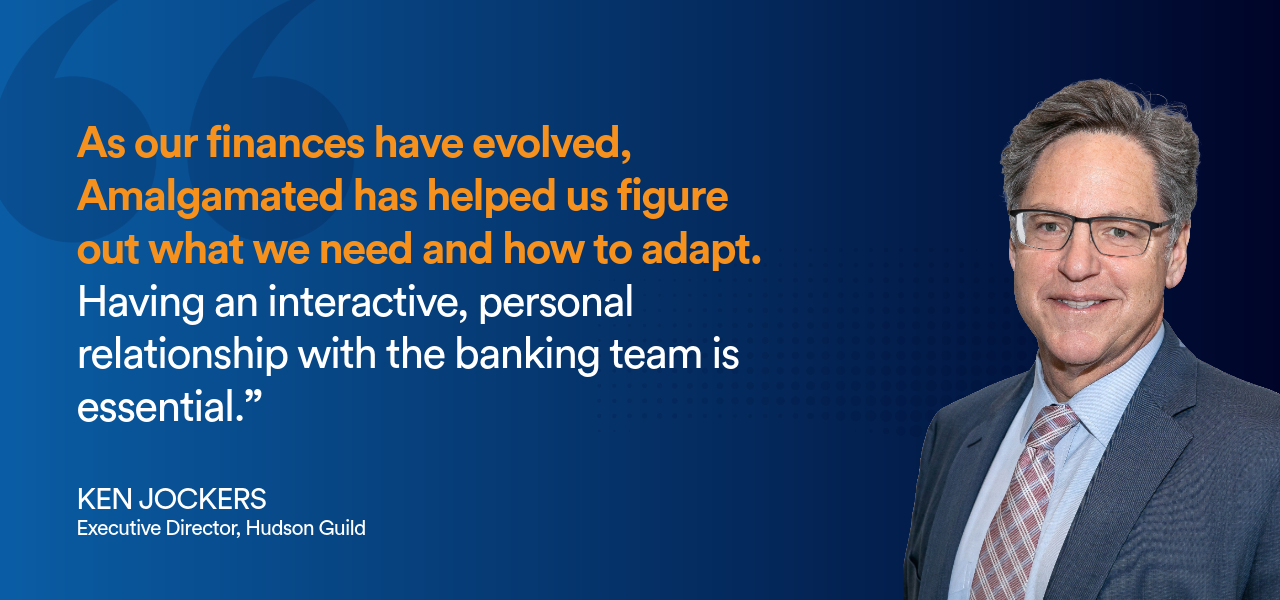
As our finances have evolved, Amalgamated has helped us figure out what we need and how to adapt. Having an interactive, personal relationship with the banking team is essential. The combination of products that meet our needs and a staff that is responsive and thoughtful is very successful for us.
Clovis, you often talk about the importance of building relationships. How does your past work as managing director of development at a nonprofit inform your work as a banker working with nonprofits?
Clovis: My work has always been about relationships. When I was a fundraiser at a nonprofit, my job was to move donors from transactional to transformational giving, and this depended entirely on deepening the relationship with each donor. The same is true in banking. My job is to deepen the relationship with our nonprofit clients so that they can count on us as a true partner in fulfilling their mission. It’s about developing mutual trust and putting their mission first.
Ken, how does Clovis’ point of view shape your relationship with the bank?
Ken: Clovis brings both the content and relationship sides to the work. Because he joined Amalgamated from the nonprofit service sector, Clovis innately understands our challenges and the consequences of our financial well-being for our programming, participants, and staff. When we call, he knows almost instantly which part of the bank’s portfolio will address our needs and the right contact. It is a critical set of skills. And not for nothing, his easy demeanor and quick humor help ease what can sometimes be stressful circumstances for us.
The same knowledge, skill, and collegiality that Clovis demonstrates are evident across the team at Amalgamated. My colleagues and I know the individuals by name. We get responses, help, and problem-solving consistently and easily. It is incredibly reassuring.
How did Hudson Guild start working with Amalgamated Bank?
Ken: I’ve often told the story of our start with Amalgamated, when we were a well-established but financially struggling organization. Our fiscal firm introduced us to the bank. They took a hard look at us, balanced that with the likelihood of our making our way out of the circumstance, and gave us a line of credit, something no other bank would do. They watched us closely, but they stuck with us as we implemented our turnaround plan and built our way to being debt-free with a healthy reserve. It has been a game-changer.
To be clear, the most essential function in our relationship must be a healthy financial structure and performance. We have that with Amalgamated. A wonderful addition to that is that the bank shares and supports our mission.
Amalgamated’s roots are evident in its culture and in the talks, trainings, and convenings the bank organizes on topics that bridge finance and community impact. Further, the team engages in our work — volunteering, supporting services, and connecting us to potential partners. Beyond our financial management, they boost who we are. Sincerely, who hugs their bankers? We do!
Clovis, you’ve mentioned that Amalgamated Bank is committed not just to financially supporting its nonprofit clients, but to bolstering the entire nonprofit sector. What are some tools nonprofits can use to better support their people, and how do you help them implement those strategies?Clovis: The first thing that comes to mind is “pay your people first.” Nonprofits are made of people, oftentimes the kinds of salt-of-the-earth employees who make our neighborhoods and communities work. Nonprofits sometimes struggle to meet payroll due to cash flow challenges. I want to work with them to figure out how they can ensure they never have to worry about payroll, which they can do with a line of credit.
Second is finding budget-neutral ways to enhance the benefits package. I’m not a benefits or HR advisor, but I’ll sometimes ask my clients if they’ve thought about creating a sick-leave pool, or ways they could use credit card rewards to enhance their holiday party, or if they could use the interest earned on their reserves to help pay for health insurance increases without passing that expense on to their employees. It’s about suggesting budget-neutral ways to enhance workplace culture.
Third, when it comes to benefits, nonprofits are treated like small businesses. They have little leverage, especially small nonprofits, and therefore pay high fees for subpar plans. Meanwhile, nonprofits as a sector are the third-largest employer in the U.S. There’s a lot of discussion in the sector about ways nonprofits could band together cooperatively to get better deals on insurance, retirement plans, and other bulk benefits. I’d like our bank to be a part of those discussions. This is worker-focused and honors our bank’s history.
On the financial side, what are some of the most common mistakes or areas of opportunity you see nonprofits leaving on the table?
Clovis: They keep everything in cash. They have excess cash that’s not earning interest. They should manage their cash between checking and savings so that the excess is earning interest, at the very least.
They are afraid of borrowing. There are scenarios in which they could qualify for a line of credit or maybe even a mortgage, but they are afraid of debt. In these scenarios, an affordable, safe loan can give them the flexibility and peace of mind they need to better support their mission.
They are not thinking through fraud protection. We do everything we can at the bank to prevent fraud. In addition to our core fraud prevention practices, we offer several services to enhance fraud prevention. Some nonprofits don’t see the value of these services, only the expense, and end up paying more in preventable loss than they would have paid for the services. We can help them think through their fraud-prevention strategies cost-effectively.
They are afraid of change. Financial systems become rusty and calcified. There are ways we can help nonprofits modernize their financial management, but sometimes they are not able to adjust their systems to meet the new reality because they stick with the way they’ve always done things.
They adopt the “non” in “nonprofit” as a mindset. They feel guilty for having a surplus. They need to realize that, for their long-term mission impact, they must adopt a growth mindset that sets the organization on a path to financial stability. It’s okay to make a profit. In fact, it’s necessary if they want to have more impact.
Ken, how would you describe the biggest financial challenges your nonprofit faces, and how does Amalgamated Bank help address them?
Ken: Working capital is our biggest challenge. Government is a reliable payer, but a very slow and complicated one. You will get the money eventually, but it often does not start flowing until many months after you have begun performing on a contract.
Amalgamated has been a reliable, straightforward lender when we need cash to keep programs open while government funds are being processed. They have also allowed our credit line to grow as we have. I can’t overstate how important that has been.
Besides the partnership with Hudson Guild, can you share one of your favorite stories from working with nonprofit organizations at Amalgamated Bank?
Clovis: There are so many good ones, but this relates directly to what Ken said. Last year, we were renewing a line of credit and noted that the organization was doing well, and we could probably increase the line. We asked if they wanted to increase it, and they said yes. We finished the renewal, and I saw the executive director the next day to deliver the news. He was ecstatic. By increasing the line, he had increased his cash on hand by about 60 days. That may not sound like a lot, but increasing the number of days of cash on hand is an important KPI for his board and his bosses. He had a board meeting the next day and couldn’t wait to tell them. It was a big win for him.
The lesson learned is that, by working in close partnership with the client, we can deliver small wins that matter to these organizations.
Contact Clovis to discuss how we could help scale your mission.